Case Study - Designing an intelligent operating system for preventive longevity services
Platform architecture and investment narrative for Sparta Longevity OS — an orchestration layer that unifies fragmented health data, AI-supported analysis, care coordination, and continuous patient engagement into a single digital operating system.
- Client
- Sparta
- Year
- Service
- Platform Architecture & Strategic Design
Overview
Preventive health and longevity services are typically delivered through isolated, loosely connected touchpoints. Genomic data sits in one system, clinical records in another, treatment protocols in a third. The patient journey is fragmented, coordination is manual, and follow-through depends on individual effort rather than system design.
Sparta Longevity OS was built around the idea of creating a unified operating system that could bring these elements together: connecting multiple health-related inputs, structuring them into a coherent decision layer, and translating analysis into actionable workflows — all within a single digital platform.
Platform Architecture
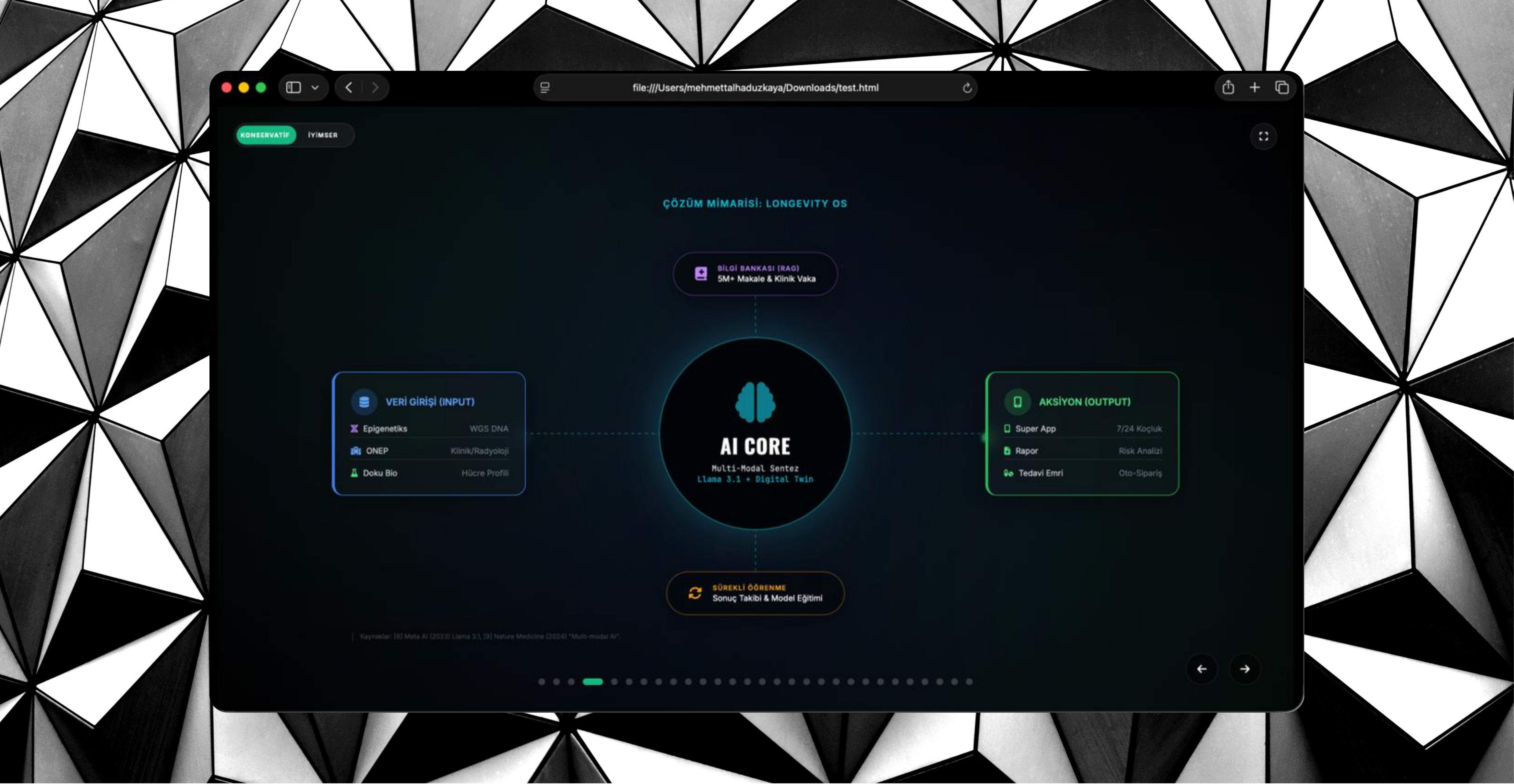
The system was designed across four integrated layers:
Data Integration Layer — Collection and normalization of inputs from epigenetic, clinical, and treatment sources into a unified data model.
Intelligence Layer — An AI-supported core that performs multi-modal analysis and synthesis across data sources, generating structured insights rather than raw reports.
Action Layer — Risk analysis, personalized recommendations, treatment planning, scheduling, and operational triggers that connect insight to execution.
Follow-up Layer — Continuous monitoring, mobile engagement, and persistent patient tracking that maintains the care relationship over time.
This architecture positions Sparta not as a health analytics dashboard, but as a care coordination and orchestration platform — a system that reduces friction, improves process continuity, and creates scalable service infrastructure.
Strategic Design
What made this project distinctive was its operating-system logic. The value proposition was not limited to insight generation. It was structured around:
- Reducing friction across the patient journey
- Improving process continuity between providers and services
- Increasing retention through systematic follow-up
- Creating a scalable infrastructure for a category built on fragmented delivery
The business model combined one-time service revenue, recurring membership economics, vendor ecosystem coordination, and platform-level integration — designed to create durable value beyond individual transactions.
What we delivered
- Platform architecture
- Investment narrative
- AI orchestration design
- Care coordination system
- Multi-layer system design
- Business model framework
- Platform layers
- 4
- Orchestration core
- AI
- Patient journey
- End-to-end
- Coordination model
- Multi-actor